Saturday, July 27, 2013

An Incomplete Revenge, by Jacqueline Winspear
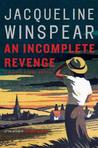
An Incomplete Revenge (Maisie Dobbs #5)An Incomplete Revenge by Jacqueline Winspear

My rating: 3 of 5 stars


     Although it's the fifth book in the series, this is my sixth Maisie Dobbs mystery, because the first I read was The Mapping of Love and Death, Maisie Dobbs #7. I would strongly suggest others not do that! I didn't think it would matter; I thought it was more like a Miss Marple/Hercule Poirot kind of series, but Jacqueline Winspear's books involve a lot of personal events in Maisie's life, and you don't want to get them out of order. That said, right now I'm quite glad I did read a later book already, because I know I liked that Maisie, and this one I found a little annoying. At least I know it's not going to be an ongoing feeling!
     For most of the previous books, I really enjoyed Maisie and the mysteries with which she was tasked. The best were probably books one and two (Maisie Dobbs and Birds of a Feather, respectively); the worst, number three (Pardonable Lies). After reading the fourth Maisie Dobbs adventure, Messenger of Truth, I decided the series was really so good I had to take a break before reading more. If I kept on, I'd quickly run out and be one of the fans waiting patiently for the next to be written. So it's been about a year and a half since I read any Maisie Dobbs at all.
     As I rejoined Maisie's life, I was glad to see her trying new and unusual activities, like weaving. I'd hoped that her experiences in Messenger of Truth would lead to that. But I was also disappointed to see that in her business and social life, she remains extremely uptight, very distant from most people, overly proper, and almost OCD in her fastidious attitude toward everything. I can see how, given her station and the era, she feels the constraints of propriety. But can't she pull away from that, in her mind if nowhere else? She seems so priggish and stiff. Yes, I know she does her detective work and climbs fences, but she's always itemizing her time and ticking off this segment of day and that; and worse, holding herself apart from many emotional situations as they are happening---though occasionally she later feels and connects to them in some way. But it's always in private, or very rarely, with just her father or Maurice.
     Maisie remarks in this novel that she's been trying to widen her circle of friends, if only to protect herself from losing most she has to time and age. But she has to realize you don't make true, lasting friends by keeping yourself apart from people, or even simply by sharing Eccles cakes and tea with someone, like she does Beattie Drummond. I imagine this is going to develop into a closer friendship, but right now there's nothing real there between them, just gossip about the case. Maisie's only real friend is Priscilla, and it took the Great War to bind them. I was truly sad to see that Maisie was so hung up on why ever she feels she must constantly restrain herself that she regretted showing emotion when talking to Priscilla (p.30-31). With whom can you share your real feelings and passion if not with your closest friends? Seeing Maisie as someone so closed off and unable to show any of her true self makes me feel like something's wrong with her. While I like peculiar detectives, I don't really feel comfortable with protagonists who are irredeemably emotionally handicapped. So I'm hoping that changes, the quicker the better---maybe that's what this book was steering toward, though it was slightly oblique. Certainly Maisie's episode of dancing showed something loosening within her. At the same time, it exemplified her issues, because she struggled with it so much, and saw it as such a wild option it was almost embarrassing for a reader (as in, you feel what's wrong with her? Everyone else is dancing, and no one there would judge her. Why can't she just be normal?)
     There were several parts of the novel that veered into extreme areas of Maisie's personal life. Those parts, as well as the more touching aspects of the case, brought me to teary eyes several times. So in spite of her distance from others, you still connect to Maisie and her experiences. But for the most part, Maisie's detective work felt rather rote and Nancy Drewish. I don't have a problem with Nancy Drew, and set against a historically accurate setting, it's all the better. But there has been more sophisticated craft in other Maisie Dobbs adventures. There was also a slow start here, and some tortuous writing (perhaps the fault of an editor): "Frankie Dobbs had told of the jokes shared while picking and laughed when recounting the way opinions on the way of the world were exchanged or a jocular back-and-forth interrupted when a wail signaling that a small child---put down to nap on a coat draped across a pile of old hop-bines---had woken from sleep." (p.38) And breathe. Now untangle what you just read.
     Several areas of the mystery disappointed me, but perhaps that's more a result of my views on human nature. I found some aspects of the history hard to accept, but I suppose it could have happened that way. It also could have happened the milder way I imagined the truth of the story before the truth was revealed. Frankly, I was shocked that Maisie took the selected truth in stride the way she did. Maybe that's just another sign of her emotional frigidity. (view spoiler)[I was also very confused that Maisie chose not to tell Webb or anyone else the real father of Anna's unborn child was Henry Sandermere rather than Alfred. She claims, "such knowledge would have brought nothing but added distress to a man who had lost so much," (p.274) but how is that the case? His sister and her child are gone no matter what, and it would distress me far more to think my sister slept with and was pregnant by the man who incited a mob to murder my family than it would to know she had an affair with his well-liked, valiant older brother. (hide spoiler)]
     The hop-picking setting, while enthralling at first, got a little repetitive in its descriptions of scent. I would have preferred more descriptions of the visuals of the Kent countryside than of just so many fragrances---or rather, so many similar descriptions of the same scent. More vivid visual descriptions together with the olfactory would have been best. The gypsy facet was a surprise, and though I found it an odd choice, (view spoiler)[especially as the way to explain Maisie's natural intuition, (hide spoiler)] it could have been delved into more deeply. It almost felt like a means to an end rather than an involving feature. I'd say the book also suffered for the fact that Billy Beale spent a lot of time out of the picture, hop picking with his family. If he ever does end up emigrating to Canada, I'll miss his presence in Maisie's cases. Priscilla, as ever, was a welcome breeze of vivacious energy and vivid reality in Maisie's stony brown routine. I could do with a whole book of Priscilla.
     Altogether, An Incomplete Revenge is a satisfactory addition to the ongoing Maisie Dobbs story, and handles the difficult task of engaging the reader in both the mystery and what might otherwise have been the story-stealing weighty events in Maisie's personal life. The two elements blend together rather well, if a little obviously sometimes. Three stars out of five for a leading romp through a hidden history in the country and solid developments in Maisie's own story.


View all my reviews on Goodreads


Labels: , , , , , ,

Saturday, July 20, 2013

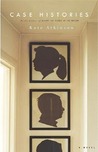
Case Histories, by Kate Atkinson

Case HistoriesCase Histories by Kate Atkinson

My rating: 1 of 5 stars


     This book certainly is not one that "sparkles with. . . page turning delight," no matter what the jacket description says. I don't really understand its point, either. It can't be the mystery portion, which is wan, or the character studies, which would be laughable if they weren't so grotesque. Perhaps Atkinson is trying to present sketches of misery and loss so readers can compare the characters' situations with their own, and say to themselves, "hey, if they found something worthwhile in life after so much suffering and woe after woe, I guess I shouldn't complain." Personally, I am not interested in studying comparative wretchedness. If I were, I would focus on nonfictional accounts, as there are more than enough. But if I didn't already know there is always hope and the promise of something better, I wouldn't be on this earth anymore.
     Unfortunately, Atkinson is a competent story crafter, so after the first chapter (the book's most engaging and intriguing), I really wanted to see what the answer to the mystery was. But the first thing I did was check to see if there was a formula to the structure of the book that would allow me to skip reading the rest of it just to find out the resolution of that particular case history. (I never do that!) I quickly saw that past the laying out of the three case histories (four, if you count the detective's own life story) in the first four chapters, the novel entangled them all. So there was nothing left but to press on and slog through the whole book.
     I admit that a couple of times I laughed out loud at a particular situation (an awkwardly named cat, for example), and there was one time I was brought to teariness (but I'm a sap). But in general, I was rather disgusted, and very little of that had to do with the sometimes morbid crimes. I am an avid reader of both true and fictional crime stories, so I'm not easily shocked. Here, I was revolted most by the way Atkinson sees people. I feel sorry for her if she thinks there are people out there whose inner lives run in the fashion she writes Amelia Land. Ms. Atkinson seems, in her attempt to write a narrow-minded, prim character, rather narrow-minded and cruel herself. The only respite is Amelia's relationship with her sister: believably quarrelsome, but with an inalterable true bond. However the relationship is barely visible, only expressed in a few moments of comfort or care.
     Most of Atkinson's characters are caricatures of human nature rather than any true, fully formed depiction. It makes me feel as though she has no perception of or intuition about people at all. It's a sad realization about any author, but especially here, considering this novel is undoubtedly supposed to be an exploration into the private thoughts of a collection of people, linked by happenstance, a detective, and the fact that they are all victims of a crime of one sort or another.
     The exception to the insipid, parochial portrayal of characters is Jackson Brodie, the detective. He feels real, has believable thoughts and emotions, and you care about him, although he acts like an idiot on occasion. Paradoxically, his own "mystery" is the most ludicrously cliche.
     There's also a couple of charming little girls, and a vivid character interviewed over the space of about a page and a half. Not too much time is spent on the little girls, either: they are mostly present to create situations or show the relationship other characters have with children. I find it incredibly odd that though Kate Atkinson is a woman, her likable and believable characters are a man and little girls. It's odder still that while her little girls are inhabitably real, her mothers are all out of sorts, incapable of properly mothering, spiteful, disconnected from children, and regretful of their own motherhood. Of course some mothers are this way, but all? Looking at the book now and thinking of its depiction of motherhood, the image it conjures is grey and sickening. The childless women aren't much better off in Atkinson's world. In fact, it seems she cannot create a woman who isn't uselessly self-serving or the sexual plaything of a man, or both. If the women aren't one or both of those, they are distant and indistinctly drawn.
     As for the crimes themselves, they aren't anything unique or particularly interesting. If the characters painted through the method of using the crimes as introduction were worthwhile, that would be fine. But since the characters are horrible, bland stereotypes, the crimes' mundanity stands out as well. If you are a halfway decent armchair detective, everything you could possibly figure out, you quickly do. The ultimate conclusions are unsatisfying, banal, stupid, silly, and fantastical.
While I found that I had to keep reading after the first chapter, I wouldn't recommend this book to anyone. Not only is it a dismal read, the quality of the writing isn't pleasurable either. While Atkinson can on occasion make events interesting, there is no magic or mastery in her words, and she has irritating syntactic quirks that serve no purpose. She's also one of those authors who, finding a word they feel is interesting, use it until it's a beaten husk. Two of Ms. Atkinson's favorites: leveret (used bizarrely) and anchorite. Sheesh with the anchorite already! In spite of the few incidental wry smiles, I got no enjoyment at all from reading this book, and even found myself handling it the way I do a very stained, mildewy old library book although it was in fine condition. It was readable, but in a word, grim.


View all my reviews on Goodreads


Labels: , , , , , ,

Tuesday, July 16, 2013

The Name of the Star (Shades of London, #1), by Maureen Johnson

The Name of the Star (Shades of London, #1)The Name of the Star by Maureen Johnson

My rating: 4 of 5 stars


     I picked this up from the library with a couple Joan Lowery Nixons and a middle reader's medieval story (The Door in the Wall) for my usual practice of alternating a heavyish, grownup book with a fun quick read of either thrill or adventure. I was pleasantly surprised to find a higher quality of writing than I'd expected, with some enviously keen observations: "Sometimes you have to see the bathroom to know the hard reality of things." (p.19) I couldn't help but admire the work right away.
     Surprisingly, I also started to enjoy the students' following of the plotline I had thought would be a formulaic Jack the Ripper copycat sensation. I say surprisingly because although the Ripper crime was introduced nearly right away, there was also a considerable section of Rory's settling in to boarding school, and that easily eclipsed the Ripper story, which was paradoxically what originally attracted me to the book, yet was not an element I expected would be well done.
     I found Wexford (the boarding school setting) nostalgic, entertaining, and remarkably realistic---except in real life you don't have a roommate like Jazza, you have Charlotte. I knew I was genuinely connected to Rory and her experience, because I kept considering why she had accepted hockey as her sport, wishing she'd stood strong with netball, and envisioning ways she might switch to it in the future. In a poorly written or fleshed out book, who cares about the sideline activities of the characters? They don't bother you while you're brushing your teeth.
     And then there's due respect paid to The Smiths, and Morrissey. If this book had been around in 1990, I'd have pushed it on my friends like religion from an evangelist. Actually, probably not. My friends weren't big readers outside of school, at least not of fun fare. I'd have just reread it myself after reading the rest.
     I have to admit that the spectacular connection I felt toward Rory and her school experiences is probably the greatest reason I'm torn about the main direction the novel takes. Part of it I could see it coming well before Rory did, but I did not see the degree to which it turns the story, which is pretty much 180, or on its head. I knew from the blurbs on the back cover that the book involved ghosts, but I didn't know the way in which it involved them, and I don't know if I really wanted the story to go that way. It sounds ridiculous to "want" a book to follow a certain course, but when you invest in characters, and are previously invested in what you consider reality and the usual depiction of paranormal events, it's hard to accept something different. Especially if there's an element of cringing "awww, man!" to part of it.
     But never mind the elements that start this particular installment rolling toward making of a series; what I was most upset about was that just after I fell in love with a certain set of characters and places, it seems those are replaced and/or left behind. I don't know if that's a permanent situation or just the fact that other characters had to be introduced and this book had to end, but it was still irritating. I'd say there should be less time with Rory acclimating to Wexford, but I loved that part best, so I wouldn't recommend that. Perhaps the next book in the series fixes the issue, since I suppose more story at the end of this book could have realigned things better. Still, I feel like a uniquely fun, vivacious school world was sacrificed to make way for a weird supernatural element; the coup of a paranormal understory (I can't call a subplot because clearly it is the driving concept of the series). It remains to be seen whether it was worth the sacrifice of the normal world, or better yet, that they can coexist--best, with some improvements made to the supernatural portion. Don't get me wrong, some of the elements are intriguing and could be genius, but the whole scenario is in a nascent stage in The Name of the Star. Genius depends on how it's developed.


View all my reviews on Goodreads


Labels: , , , , , ,

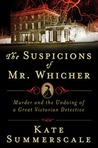
The Suspicions of Mr. Whicher: A Shocking Murder and the Undoing of a Great Victorian Detective, by Kate Summerscale

The Suspicions of Mr. Whicher: A Shocking Murder and the Undoing of a Great Victorian DetectiveThe Suspicions of Mr. Whicher: A Shocking Murder and the Undoing of a Great Victorian Detective by Kate Summerscale

My rating: 4 of 5 stars


     It is rare to find a book that matches such mastery of research with fluid, vivid writing, and a truly captivating subject. The meticulous research and careful notes are so pleasing, and the story reads like an excellent cozy detective novel for at least half its length. As is common in such novels, there is a healthy peppering of alternately entertaining and startling (true) period anecdotes associated with the detective of interest, which in this case craft a richer, three-dimensional world of Victorian crime and detection methods. Summerscale also draws skillful, well-read parallels to sensational novels of the day, though at times I was annoyed by or had to skip over these references or excerpts, having not read the novel they were spoiling.
     There is a decline in the polished flow as the focus splinters away from the time of the crime and Mr. Whicher's titular suspicions, but that could be at least partly attributed to the actual events of the case. There was indeed an unsatisfactory lull in reality. The crime itself, as well as the personalities involved, easily propel a reader past any dips to the conclusion. The ultimate answer to "whodunnit," though not new, has shocking presentation one doesn't expect. Much more exciting than resolutions in most true crime books.
     But the vigor and vivacity of the Victorian world inhabited through the first half of the book is never really regained. There are a few small windows of striking detail in the aftermath stories, but most of the tail end (the last 40 pages) of the book is scanty details followed by the drudgery of which participant in the affairs died off when, and how. Again, I'm sure the dearth of details is due in part to simple lack of primary information, and what little there is, you do want to know. It may have been hard to paint much of a picture with so little information.
     I've read many, many books on true crime (not nearly reflected in my newish and somewhat lackadaisical Goodreads history), and I would classify this as near perfect. As much as I enjoy them, I don't think I would ever give five stars to a true crime book, because I reserve that for books that changed my life or shine in my memory forever. The Suspicions of Mr. Whicher is definitely exceptional. Summerscale even provides a dated family tree, list of characters, and notes on monetary conversion for complete and easy reader understanding. You can feel the proper, thorough research oozing through the pages, to the point of complete immersion. A thoroughly satisfying exploration of the 1860 murder at Road Hill House, with an eye into the work of one of the earliest detectives.
     For those who enjoy this book, I highly recommend The Killer of Little Shepherds: A True Crime Story and the Birth of Forensic Science, which is also excellently researched (though quite a bit more gory).


View all my reviews on Goodreads


Labels: , , , , ,

Monday, July 15, 2013

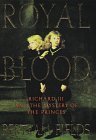
Royal Blood: King Richard III and the Mystery of the Princes, by Bertram Fields

Royal Blood: King Richard III and the Mystery of the PrincesRoyal Blood: King Richard III and the Mystery of the Princes by Bertram Fields

My rating: 3 of 5 stars


     Royal Blood is informative, engaging, but also rather frustrating. It reads like a thoroughly researched term paper by someone well-versed in the subject matter, but in a hurry and unwilling to alter his already-decided thesis.
     If you want to know the story of the end of the Plantagenet line, all the facts may be here. But I'm not quite sure, because there aren't the usual footnotes and references that should be in a nonfiction history, and I find that pretty unforgivable. I want to be able to check your sources, and in some cases, read your sources myself after I finish your book. Yes, there is a "Selected Bibliography" and list of resources at the end, but a reader really has to be told which facts came from where in a proper history.
     Oddly, it is clear although he doesn't give specific references, Fields has thoroughly familiarized himself with several resources on the topic, because he frequently argues with (the theories of?) several other authors. Although I may disagree with her theories, I feel particularly sorry for Alison Weir, whom Fields holds in obvious contempt, and repeatedly mocks and berates for her assumptions throughout his book.
     Fields is guilty of the same assuming he criticizes in others---at least it appears so: again, it's difficult to tell when something is based on fact unless the author notes it. But he uses "it is likely" and "surely," and alternatively "it is hard to believe" or "it is unlikely that" so often that he seems to be writing his own story, and I'm not sure it's to be trusted. Why is it likely? Because he says so? I don't know.
(view spoiler)[For example, Fields claims it's unlikely that Tyrell's confession happened, because if it did, it would have included the burial place of the princes, and surely Henry VII would have dug up the boys and given them a royal funeral. Yet Fields has also suggested Henry VII might have killed them if they were still alive when he took power. So why is it "likely" he'd dig up and honor princes he'd have killed himself? Sure, it's 15-20 years later, but there were still other Plantagenet descendants around then to threaten his throne, and why honor two very important ones, reminding the public of who Henry VII is not?

Fields also complains that the skeletons found in 1674 were found under stairs, and supposedly the princes were buried at the foot of stairs, and then moved. The foot versus under the stairs is nitpicking a bit, and obviously the story that they were moved may just have been a lie (who wants to go to all that reburial trouble, anyway?) Plus the moving was only supposed to happen if Richard III was aware of or the one who ordered their murder! So saying the skeletons, if they were those of the princes, shouldn't have been under the stairs doesn't do anything to prove Richard's innocence for me. (hide spoiler)]

     Apart from the increasingly annoying assertions based on unnamed reasons, Fields provides a detailed story and an interesting read. I don't know if I agree with his ultimate theory, but he offers some fair reasoning. The oddest thing is that I started the book with somewhat of a Revisionist bias, and the book has a Revisionist bias, but I ended up feeling closer to a Traditionalist view by its end. Some of the facts laid out, though unconvincing or unimportant to Fields, seem to point toward the likelihood of Richard's guilt to me. As before, though, I find the idea of the deed only mildly surprising, and think history has given Richard III a raw deal when rulers throughout history have been far more reprehensible.
     But I'm not yet convinced of either Revisionist or Traditional Richard III yet. I look forward to reading other histories on the subject---with luck, a disgustingly over-annotated and meticulously footnoted one next.


View all my reviews on Goodreads


Labels: , , , , ,

The Daughter of Time, by Josephine Tey

The Daughter of TimeThe Daughter of Time by Josephine Tey

My rating: 4 of 5 stars


     The Daughter of Time rekindled my natural desire to read after a period where a terrible book turned me off reading the way a bad, sick hangover turns you off alcohol. I saw it at the top of the list of Best Crime Novels, read the abstract, and was thoroughly interested. Richard III is one of the few Shakespeare plays I haven't read or seen, and somehow my school didn't cover much early English history, so I came to the story of the last of the Plantagenets free from any predispositions. I don't know if that would be a plus or a minus to most readers, but I was glad it was the case.
     Actually, I was glad about most aspects of this book, and reading it. It is a fast-paced, elegantly simple story; with bright, likable, well-formed characters. It is funny and engrossing, friendly and fascinating. At first I was a little put off by Inspector Grant's personality: dismissing all his gifted books as too silly or formulaic and calling his attentive nurses The Midget and The Amazon, but the truth is it makes him real. He's fussy and impatient, but without a little of that character he wouldn't be as fun to follow into his passions.
     It's really the characterizations like Grant that elevate a simple opinion piece on Revisionist Richard III to a gem of a detective novel. Like Rear Window, it takes place in a single room of convalescence, so the action is all in conversations or thoughts of history. But once mystery piques Grant's interest, you never feel as though you are in one room. You are transported not only by the saga of the Plantagenets, but by varied visitors---the extravagant but caring Marta; quiet, wise Matron; the mussed, musing, unexpected heir Brent Carradine.
     But the mystery is the story of Richard, his nephews, and the complicated relationships between ever-entwining branches of the rest of the family and associated aristocrats. I am a lover of history, but this book really puts you there and sets out the story in a way you could never forget. I've heard people complain about the difficulty of remembering the line of English rulers, but after reading The Daughter of Time, I know I'll never forget at least this section of it (Edward III through Elizabeth I, though the focus here is of course Edward IV through Henry VII). Even as a history lover, I recognize it's a rare gift to lay out such a complicated, distant set of events in a way that provokes excitement and anticipation. Josephine Tey does it with aplomb. I was terribly sad to see she died rather young and therefore wrote relatively few books (under this and her other pseudonym, Gordon Daviot). I wanted to read another of her books immediately, but decided to pace myself, especially with the Inspector Grant set of six.
     Luckily, I also gained an extra subject to read about. The story of the end of the Plantagenets captured my imagination well enough that I'm interested in reading several more (nonfiction) books about it as well. I know what Inspector Grant and Josephine Tey consider truth, and that inspires me to find what I do. I'll likely reread this book again someday, and look forward to revisiting the characters as well as the mystery from a more informed mindset. The only reason I give four stars instead of five is a tiny bit too much of Grant and Carradine patting each other on the back and yes-manning each other near the end. I may revise to five, depending on how long I keep looking back on the book with the fondness I have been.


View all my reviews on Goodreads


Labels: , , , , ,

Sunday, July 14, 2013

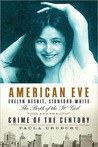
American Eve: Evelyn Nesbit, Stanford White, the Birth of the "it" Girl and the Crime of the Century, by Paula Uruburu

American Eve: Evelyn Nesbit, Stanford White, the Birth of the American Eve: Evelyn Nesbit, Stanford White, the Birth of the "It" Girl and the Crime of the Century by Paula Uruburu

My rating: 1 of 5 stars


     This book put me off reading for over a year. And I'm someone who carries around books in her purse (sometimes more than one). I marked pages as I went along, thinking I'd write a scathing yet in-depth review as soon as I finished, but by the time I did the very sight of it made me sick.
     It's a shame, because the subject matter is fascinating, and it seems that Uruburu accessed a lot of information. However, that information was put together extremely poorly. From insane sentence structure to repetitive, narrow-minded taglines for certain characters to bizarre and hypocritical "points," it's a frustrating slog. I wanted to know the rest of the story as I went, but I was practically spitting on the book every time I picked it up. I'd pick out passages to read aloud to others, exclaiming, "and that entire passage is one sentence!" or, "in whose mind could this make sense?" Obviously I don't have the book anywhere near me to offer page numbers for examples, but try opening it at random.
     One truly irritating aspect that poked me again and again like a giant tack was that Uruburu claims this book comes from a feminist angle, but she paints ridiculously unfeminist caricatures of the women here. And I'm not even a feminist! Evelyn Nesbit is somehow a perpetual child to be sympathized with and clucked over, even though in that period, many women her age (for most of the book) would be self-sufficient and/or married. Her mother is always depicted as an overbearing, manipulative, interfering master who is peddling her "child." This so-called child was hardly a child for most of what went on. If she was manipulated or Svengali-ed into doing things she didn't want, she was a fool, not a victim. I think perhaps apart from marriage to her Jekyll & Hyde husband, Evelyn didn't get into anything she wasn't choosing for herself.
     I thought this was going to be a fantastic book. I love the era, love true crime, love history. The plain facts are interesting, and of course the book contains them. So much information! You can tell the time and effort it took to amass all this research. I feel that Uruburu was genuinely enraptured with the history. But what has been done with all the raw material is a tragedy. I blame the editors as much as the author, because they should have been ashamed to let the incredible potential here get formed into and published as this revolting mess.
     I feel on the way to recovery from this nightmare, and just read a fabulous historical true crime book I highly recommend: The Suspicions of Mr. Whicher: A Shocking Murder and the Undoing of a Great Victorian Detective I wouldn't even sully it by mentioning it in the review of American Eve, but I do have mercy on my fellow readers and want you all to find the best books to read.


View all my reviews on Goodreads


Labels: , , , , ,